Between 1865 and 1930, formerly enslaved African Americans and their descendants founded hundreds of freedom settlements, or freedom colonies, throughout Texas. During Reconstruction and Jim Crow, Texas freedom colonies became pivotal places and spaces of Black landownership, economic self-sufficiency, refuge from white racial terror, and collective uplift and belonging within a broader society openly hostile to Black life and futurity. Several freedom colonies were established in and around Austin, including a number of rural freedom communities located across the city’s hinterlands. Shortly after Emancipation in 1865, Thomas and Mary Kincheon (also spelled “Kinchion”) established a family farm and founded Kincheonville in an unsettled area approximately seven miles south of Austin near Williamson Creek.
During the mid-to-late-nineteenth and early-twentieth centuries, Kincheonville’s landscape was primarily agrarian in character. Yet, after the Second World War, Thomas W. Kincheon Sr. and his sons established a successful real estate enterprise and platted portions of the community’s agricultural land for subdivision development.
Although most Texas freedom colonies were composed of all-Black residents, creating a space of “segregated blackness” (Scott 2018), tradition holds that African Americans in Kincheonville lived alongside White and ethnic Mexican households. As historian Neil Foley (1997: 7) stresses, “The cotton culture of this fertile region of central Texas was not racially static or bipartite but a site of multiple and heterogeneous borders where different languages, experiences, histories and voices intermingled amid diverse relations of power and privilege.” This project, in turn, provides an opportunity to explore the unique texture of rural Black experience on the South’s multi-racial and multi-ethnic western frontier.
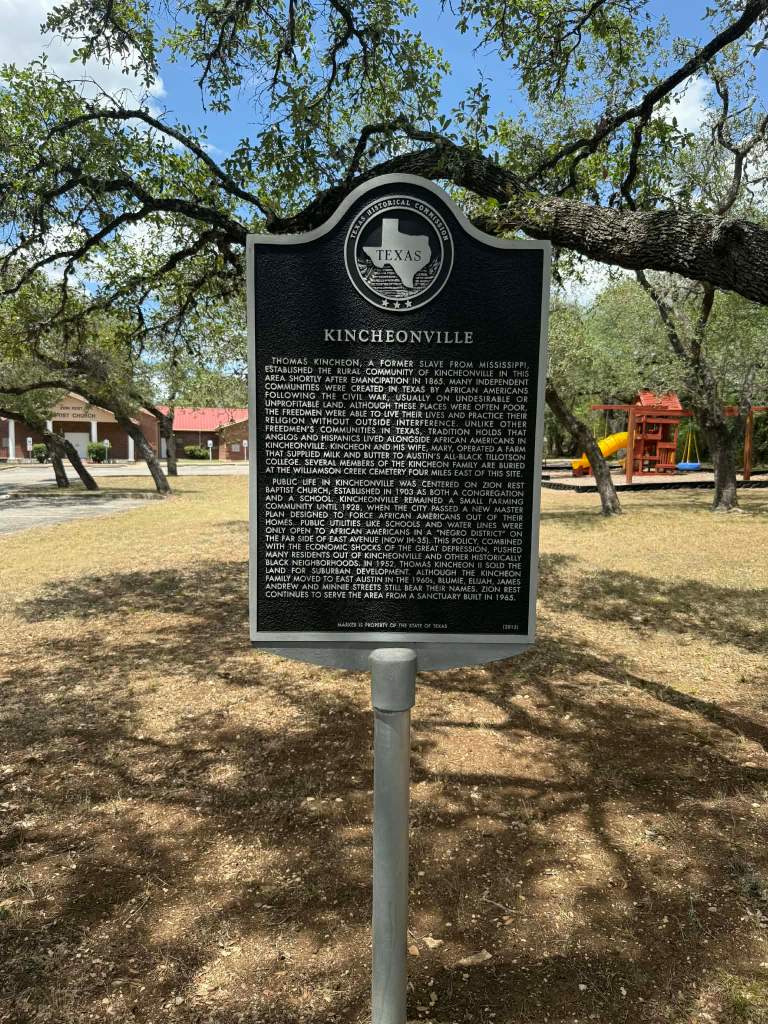
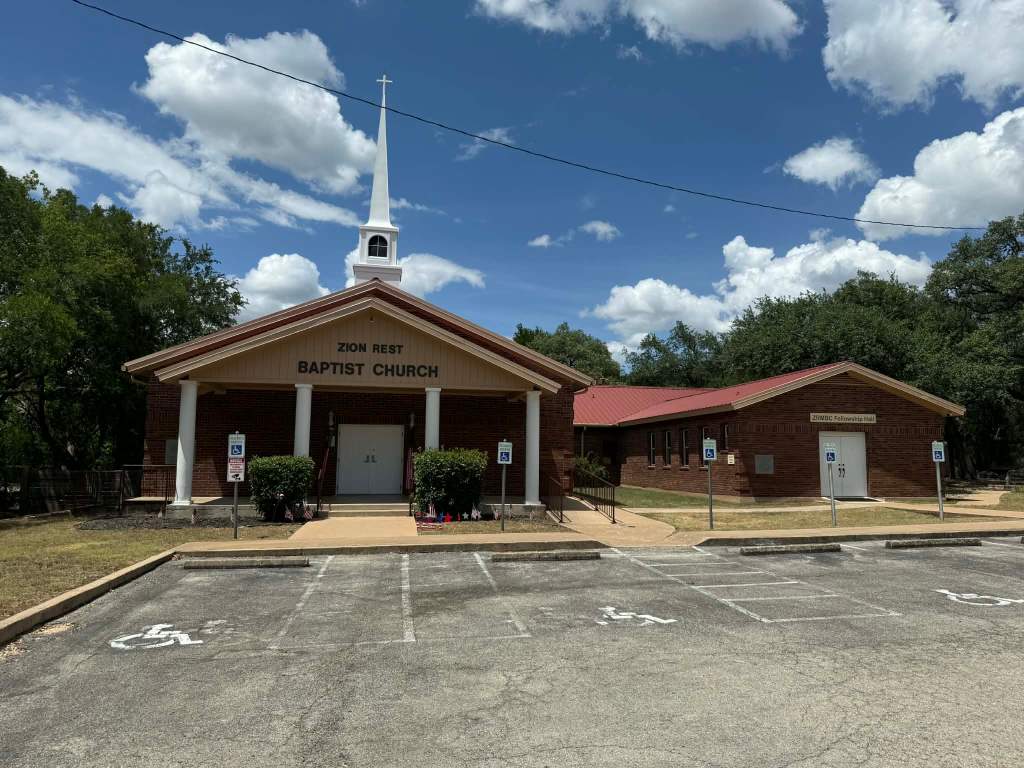
Today, Kincheonville’s rich history is commemorated by an official Texas Historical Marker located on the grounds of the Zion Rest Missionary Baptist Church, one of the community’s historically Black churches alongside Dunn’s Memorial Baptist Church. Additionally, several streets hold the names of Kincheonville’s founding family, including Thomas Kincheon, Blumie, Elijah, James Andrew, and Minnie Streets. Members of Kincheonville’s founding families and community are buried across Austin, including at Williamson Creek Cemetery. Yet, like many Texas freedom colonies, dispossession, population loss, and gentrification threaten to erase Kincheonville’s heritage landscape. This project aims to use archaeology to keep Kincheonville’s landscape and memories alive.
 Jordan E. Davis, M.A.